Sealcoating in Winston-Salem, NC
The single best dollar-per-year defense against UV, water, and freeze-thaw damage on Piedmont driveways and parking lots.
Get My Free Sealcoating Estimate (336) 276-1256Sealcoating in Winston-Salem, NC
A1 Asphalt Winston-Salem sealcoats driveways, parking lots, and private roads across Winston-Salem and the Piedmont Triad. Done at the right interval with the right material, sealcoating is the cheapest maintenance dollar you can spend on asphalt — it blocks UV from oxidizing the binder in summer and seals water out of the surface before freeze-thaw cycles can pop it open in winter. Call (336) 276-1256 for a free estimate. We use commercial-grade coal-tar or asphalt-emulsion sealers, applied with squeegee and spray at material and surface temperatures within manufacturer spec.
Why Sealcoating Matters in the Piedmont
Asphalt binder oxidizes under UV, dries out, and loses the elasticity that lets it flex with temperature changes. In Winston-Salem that breakdown happens fast — long hot summers do most of the damage, then winter freeze-thaw cycles exploit every micro-crack the dried-out surface has developed. Sealcoat is a thin protective layer of bitumen, polymers, and aggregate that blocks UV from reaching the binder and provides a sacrificial waterproof barrier that takes the wear instead of the asphalt itself. On a Winston-Salem driveway, a quality sealcoat extends surface life by 30 to 50 percent for roughly 5 to 10 percent of the replacement cost. On commercial lots the math is even better because the surface area is larger and the consequences of premature failure are worse — lost parking, liability exposure, ADA compliance issues. Skip sealcoating and you're betting that the original install will outlast the maintenance program you should be running.


Request a Sealcoating Estimate
Limited Slots Available This Month!
Coal-Tar vs. Asphalt-Emulsion Sealers
We work with both major sealcoat chemistries and recommend based on the project. Coal-tar sealers are the long-running industry standard — strong resistance to gasoline, oil, and chemical spills, deep black finish, and a long track record on commercial lots. They're harder to find than they used to be due to environmental regulations in some jurisdictions, but they remain available and legal across most of North Carolina. Asphalt-emulsion sealers (often called AE sealers) are water-based, lower-VOC, and increasingly common on residential driveways. They don't have quite the chemical resistance of coal-tar, but for a residential drive that mostly sees passenger cars and the occasional gas spill, they perform well and cure faster. We talk through the options on site and recommend the right material for your surface, your use case, and the conditions on application day. Both products get cut with water and sand to manufacturer spec — we don't water down material to save cost.
Application Conditions and Recoat Intervals
Sealcoat has to go on a clean, dry surface at the right temperature. We sweep and blow the surface clear of dirt, gas, and debris before any product touches it, then spot-treat oil stains with a primer that lets the sealcoat bond rather than peel. Application requires air and surface temperatures above 50°F and rising, with no rain in the forecast for at least 24 hours — that knocks out most of December through February in the Triad. Two coats are standard for most lots; high-traffic commercial sometimes warrants three. Recoat intervals depend on traffic and exposure. Residential driveways in Winston-Salem typically want sealcoat every 3 to 5 years; commercial lots every 2 to 3 years. Sealcoating more often than that doesn't add life and can cause coating buildup that flakes. Waiting longer lets the binder oxidize past the point where sealcoat can recover it.
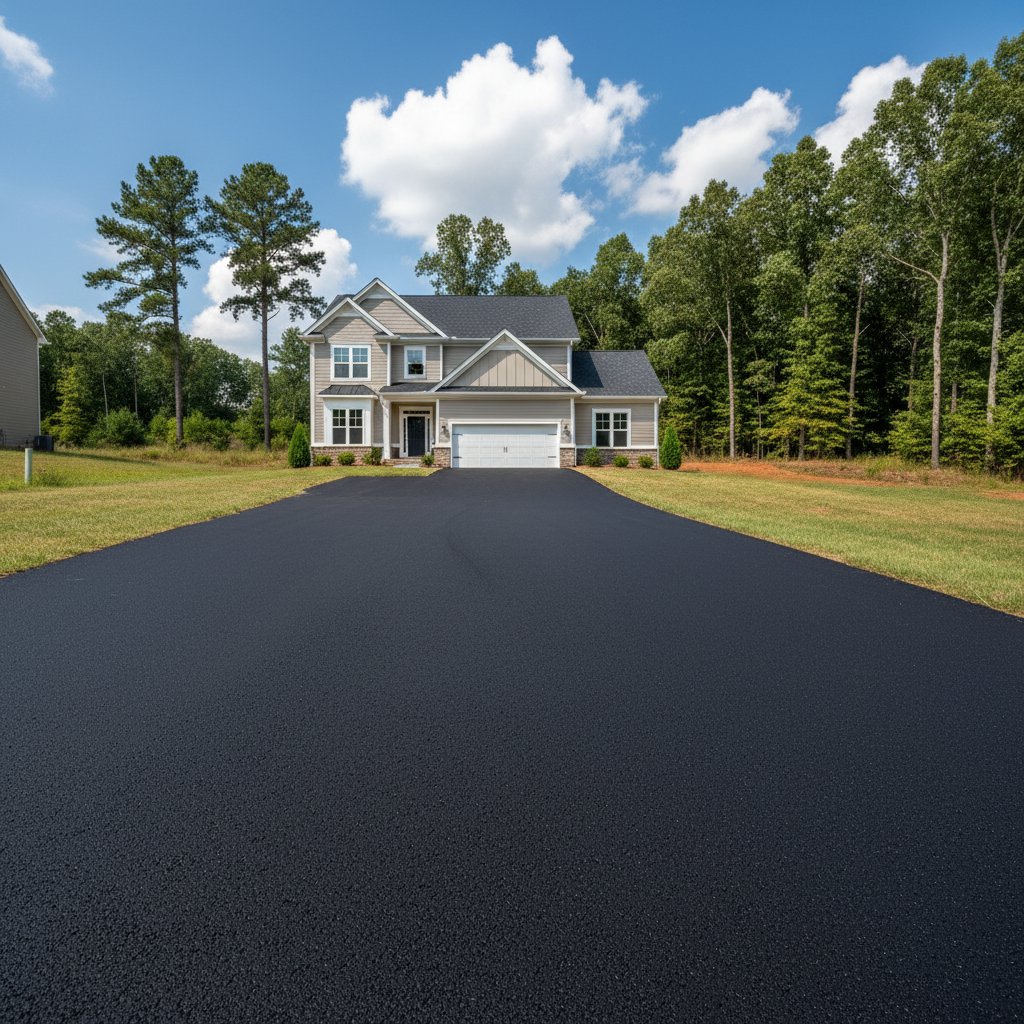
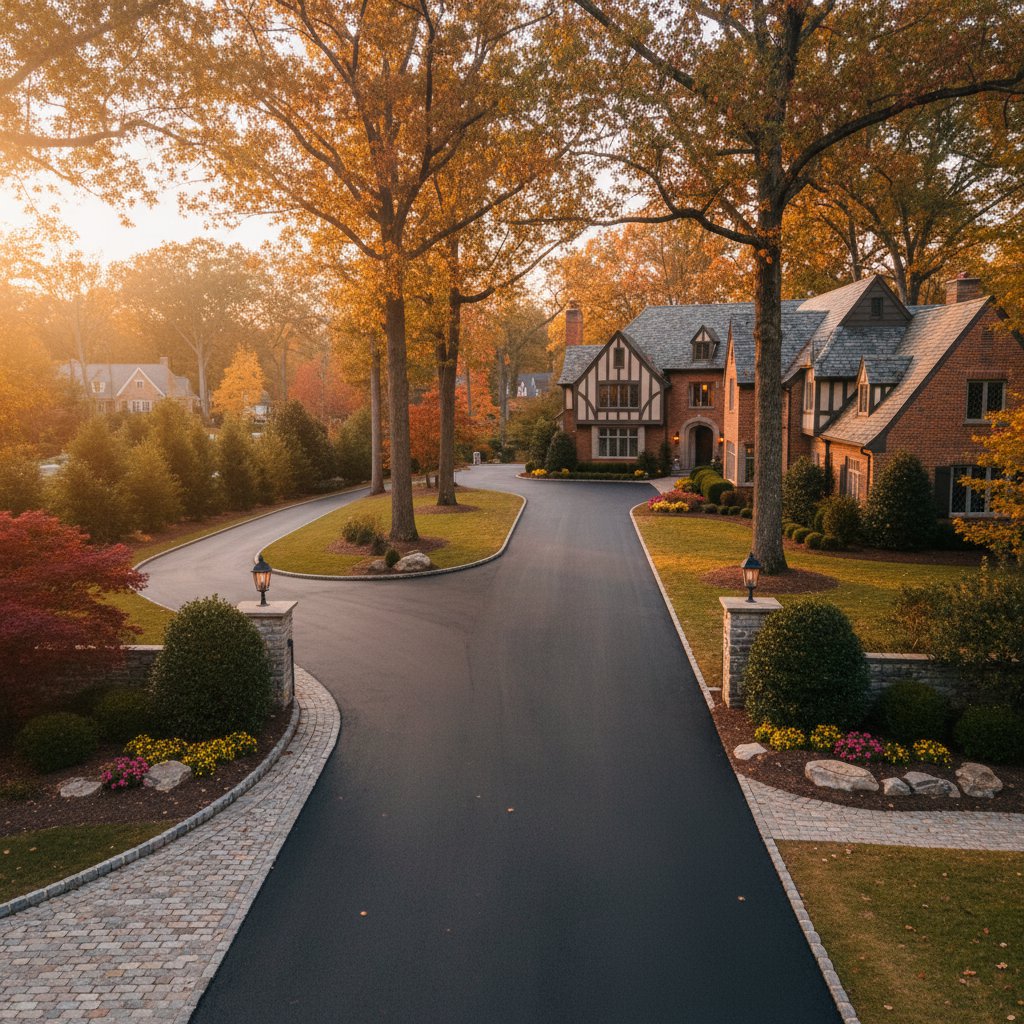
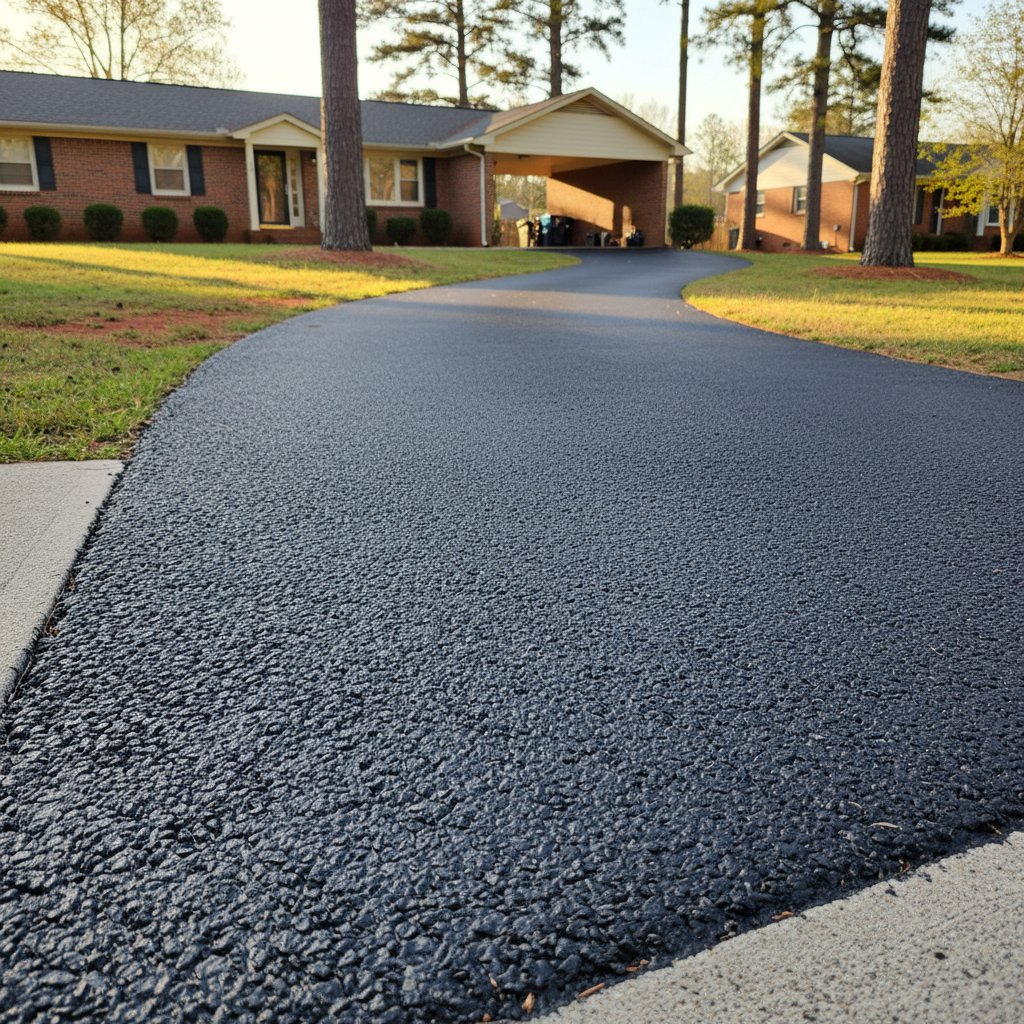
Recent Sealcoating Projects in Winston-Salem
Signs You're Due for Sealcoat
These are the visual cues that tell you the surface is starting to oxidize and lose its waterproof seal.
Gray, Faded Surface
Healthy asphalt is deep black. When it fades to gray, the binder is oxidizing and water is starting to penetrate.
Visible Aggregate at Surface
When you can see the stones in the mix because the binder has worn away, the surface is no longer sealed and you're losing material.
Hairline Cracks Spreading
Map-like hairline cracking is early-stage oxidation. Sealcoating now stops it; waiting two more winters turns it into something more expensive.
Three to Five Years Since Last Coat
Even surfaces that look fine are due for recoat at the right interval. Sticking to a schedule is cheaper than reacting to visible damage.
How We Sealcoat
Four steps from sweep to final cure.
Surface Cleaning
We sweep, blow, and pressure-clean the surface, then spot-treat oil and grease stains with primer so the sealcoat bonds.
Crack Filling
Cracks larger than hairline get cleaned and filled with hot rubberized sealant before any sealcoat goes on top.
First Coat Application
Sealer is applied with squeegee at edges and spray across the field, at material temperature and dilution to manufacturer spec.
Second Coat and Cure
Second coat goes on cross-wise once the first has set. Surface is closed to traffic for 24 hours so the product cures cleanly.
What Our Clients Say
"Our driveway off Robinhood Road was alligator-cracked from years of freeze-thaw. The crew milled the worst sections, repaired the base, then laid a clean overlay. Two winters in and it still drains right and looks like the day they finished."

Time for a Sealcoat?
Get a free estimate from a Piedmont sealcoating contractor that uses commercial-grade product at proper dilution. Sealed surfaces last; faded ones don't.