Parking Lot Striping in Winston-Salem, NC
New layouts, restripes after sealcoat, ADA-compliant designs, and traffic paint applied to last through Piedmont seasons.
Get My Free Striping Estimate (336) 276-1256Parking Lot Striping in Winston-Salem, NC
A1 Asphalt Winston-Salem stripes parking lots across Winston-Salem and the Piedmont Triad — office parks, retail centers, churches, medical buildings, apartment properties, schools, and warehouse facilities. Striping is what most users actually notice about a lot. Fresh, accurate lines signal a property that's maintained; faded, crooked stalls signal one that isn't. We handle new layouts after paving, restripes after sealcoat, ADA compliance updates, and full re-layouts when the existing design isn't working anymore. Call (336) 276-1256 for a free estimate.
Layout, Stall Counts, and What Maximizes Useful Parking
Most lots can be re-laid out to add 5 to 15 percent more usable stalls without expanding the pavement, just by using current ADA spacing rules, optimizing aisle widths, and adjusting stall angles. We start every striping project — new or restripe — with a layout review. Standard 90-degree stalls in North Carolina are typically 9 feet by 18 feet with a 24-foot drive aisle, but lots with constrained dimensions sometimes benefit from angled stalls (60 or 75 degrees) that reduce aisle width requirements and pack more spaces in. ADA accessible stalls have to be 8 feet wide with a 5-foot access aisle for cars, 8 feet wide with an 8-foot access aisle for vans, and the count required depends on total stall count — currently 1 accessible stall per 25 total for the first 100 stalls. We design those requirements in from the start, not as an afterthought, and we verify ramp slopes and accessible routes connect properly to building entrances.


Request a Striping Estimate
Limited Slots Available This Month!
Traffic Paint vs. Thermoplastic
We work with two main striping materials. Standard traffic paint is the most common choice for residential apartment lots, smaller commercial properties, and any restripe job. It's water-based or solvent-based latex, applied with a striping machine at controlled thickness, dries to traffic in 15 to 30 minutes, and lasts 1 to 3 years in Triad conditions depending on traffic volume and exposure. It's affordable, fast, and looks clean. Thermoplastic is a polymer-modified material applied molten with specialized equipment. It bonds aggressively to the asphalt, lasts 4 to 7 years, and has built-in reflective glass beads that make it visible at night. Thermoplastic is the right call for high-traffic commercial lots, fire lanes that have to remain visible long-term, and any property where restriping logistics are difficult. The per-foot cost is higher but the per-year cost is meaningfully lower on the right project.
Compliance, Inspections, and the Details That Catch People
Striping has to comply with several overlapping requirements. ADA accessibility is federal; fire lane marking is local fire code; stop bars, directional arrows, and crosswalks fall under property liability and local code. Most commercial lots also have specific lender or insurance requirements for marking. We track those requirements job by job. Common issues we catch and fix during restripe projects: ADA stall counts that no longer match current building occupancy; fire lane striping that's faded past visibility requirements; van-accessible stalls without proper 8-foot access aisles; missing or faded stop bars at egress points; outdated 'no parking' marking on access aisles. The cost of fixing those during a routine restripe is minimal compared to the cost of a citation or a lawsuit. We document the layout and the changes so the property has a record for future striping cycles.
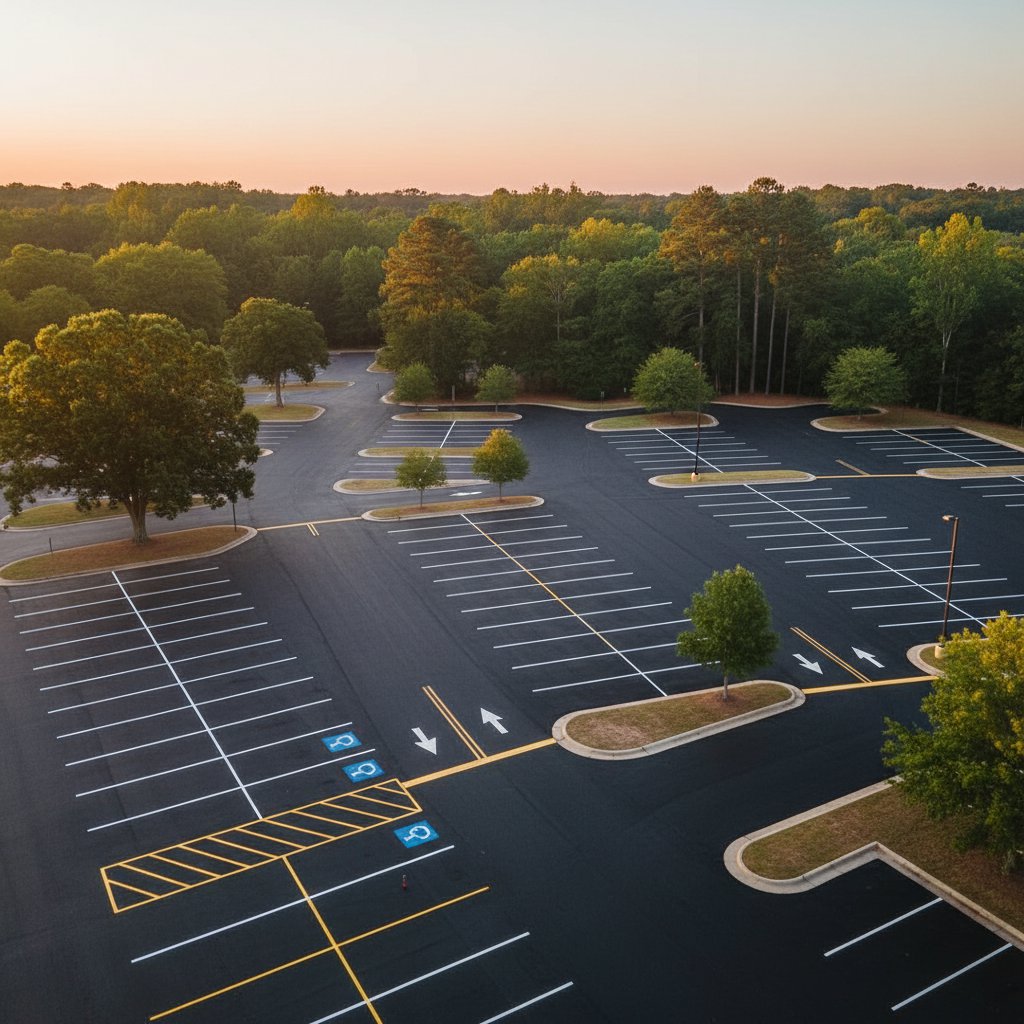
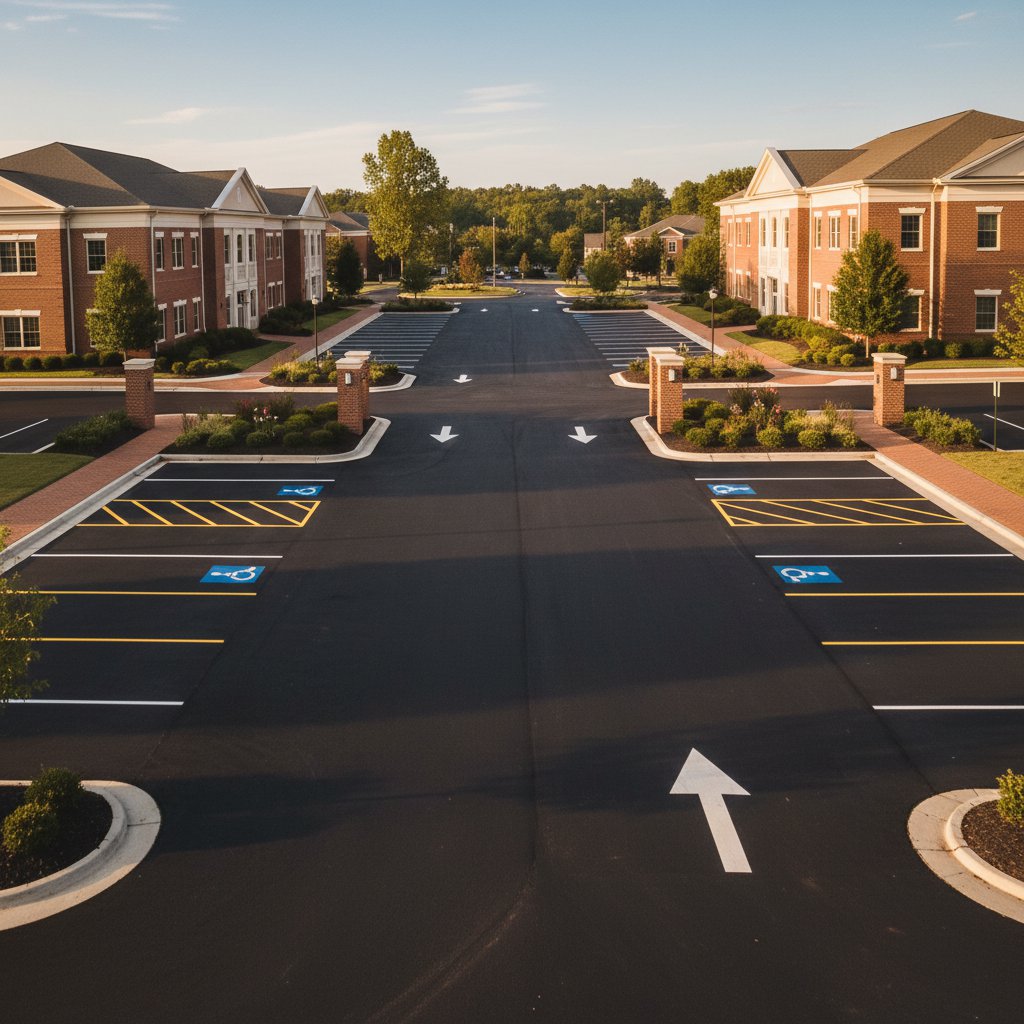
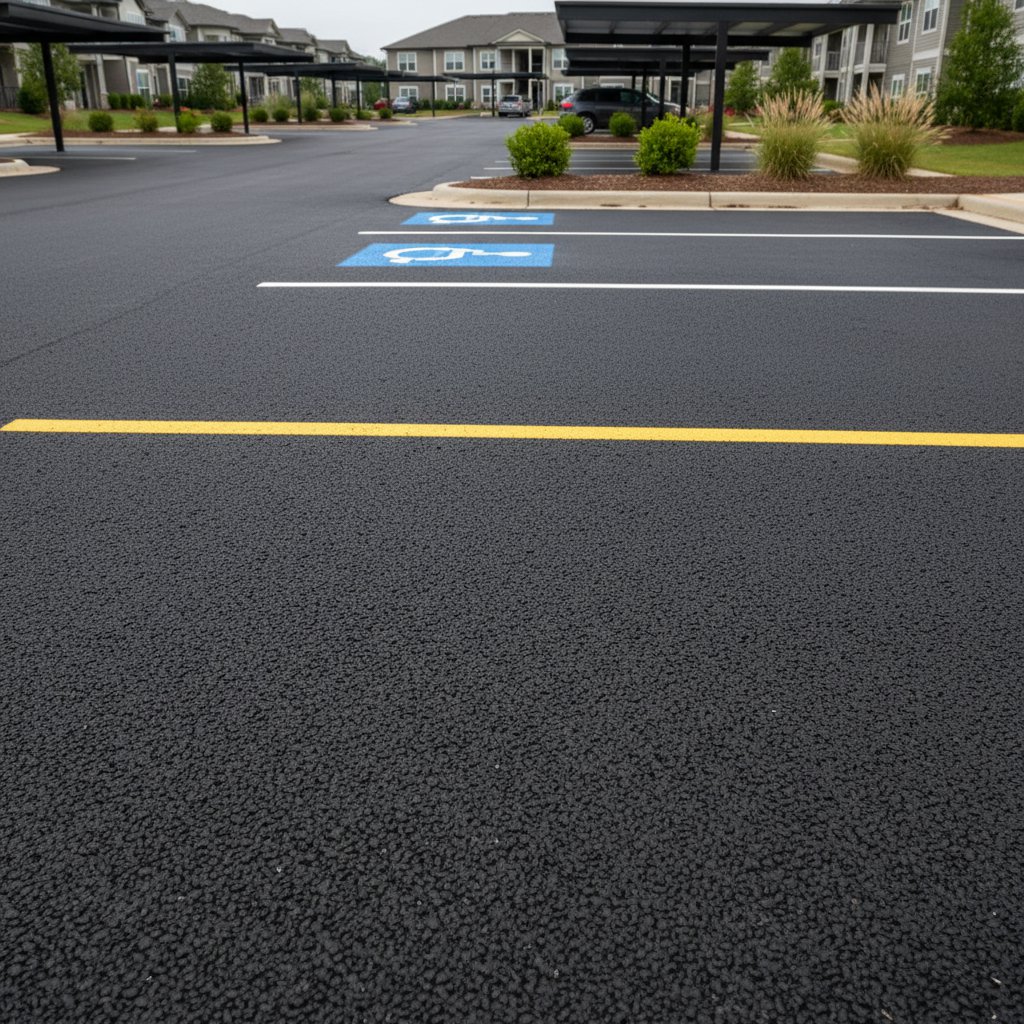
Recent Striping Projects in Winston-Salem
Signs Your Lot Needs Striping
When restriping moves from optional to important.
Lines Faded Past Recognition
If drivers can't clearly see stall boundaries, you're losing parking efficiency and exposing the property to liability.
After Sealcoat
Sealcoat covers existing striping. Restriping is the final step of any sealcoat project and should be priced in upfront.
ADA Standards Have Changed
Older layouts may not meet current accessible stall counts, dimensions, or signage requirements. Restripe is the time to fix it.
Layout Isn't Working Anymore
Tenant changes, traffic flow problems, or expansion can make the original layout obsolete. We re-layout from scratch when needed.
How We Stripe
Four steps from layout review to final lines.
Layout Review
We measure the lot, review the existing layout, check ADA compliance, and identify opportunities to add stalls or fix problems.
Surface Prep
Surface is swept and blown clear. Old striping that's been covered by sealcoat or that's interfering with the new layout is masked or removed.
Stall and Markings
Stalls, accessible stalls, fire lanes, stop bars, arrows, and crosswalks are laid out and painted with traffic paint or thermoplastic.
ADA Signage and Final Check
Accessible stall signage is installed, the layout is walked for accuracy, and the property manager gets a photo record of the final result.
What Our Clients Say
"Our driveway off Robinhood Road was alligator-cracked from years of freeze-thaw. The crew milled the worst sections, repaired the base, then laid a clean overlay. Two winters in and it still drains right and looks like the day they finished."

Ready to Restripe?
Get a free written estimate for striping that meets current ADA requirements, optimizes stall counts, and lasts through Triad seasons. Layout review included.