Crack Filling & Sealing in Winston-Salem, NC
Hot rubberized sealant routed and applied to spec — the cheapest maintenance dollar you'll ever spend on Piedmont asphalt.
Get My Free Crack Filling Estimate (336) 276-1256Crack Filling & Sealing in Winston-Salem, NC
A1 Asphalt Winston-Salem crack-fills driveways and parking lots across Winston-Salem and the Piedmont Triad. Crack filling is the single highest-return maintenance task on Winston-Salem asphalt — water that gets into a crack in November, freezes in January, and expands by 9 percent is what turns a quarter-inch crack into a pothole by March. A few hundred dollars of hot rubberized crack sealant applied in fall blocks that cycle and protects the entire pavement structure. Call (336) 276-1256 for a free estimate.
Why Crack Filling Is Different in a Freeze-Thaw Market
Crack filling in a southern coastal climate is mostly about keeping UV and oxidation in check. Crack filling in Winston-Salem is about keeping water out of the pavement structure during the months when it can freeze and expand. The Piedmont sees roughly 30 to 40 nights below freezing in an average winter, with occasional ice events and the kind of repeated freeze-thaw cycling that destroys asphalt fastest. The physics are simple — water that gets into a crack and freezes expands by about 9 percent. That expansion pushes the surrounding asphalt outward, widening the crack a fraction of an inch per cycle. After 20 to 30 cycles in a single winter, what was a hairline crack in September is a half-inch trough by April, with base damage already starting underneath. Filling cracks before winter blocks the water-ingress phase entirely and effectively pauses the failure cycle.


Request a Crack Filling Estimate
Limited Slots Available This Month!
Hot Rubberized Sealant vs. Cold Pour
Crack sealant comes in two main categories. Cold-pour acrylic and asphalt-emulsion sealants are sold in jugs at hardware stores and have a place on hairline cracks where you're sealing surface oxidation more than blocking deep water ingress. They cost less, apply easier, and last about 1 to 2 seasons in Triad conditions. Hot rubberized sealant — the kind we use on professional crack work — is a polymer-modified asphalt product heated to 380 to 400°F in a melter and applied molten with a wand. It cools into a flexible rubber-like seal that stays bonded through freeze-thaw cycles, expands and contracts with the pavement, and lasts 4 to 7 years. The application cost is meaningfully higher than a cold pour, but the per-year cost is lower and the protection is dramatically better. For any crack wider than about an eighth of an inch in Winston-Salem, hot rubberized sealant is the right material.
Routing, Cleaning, and Application
The single biggest reason crack sealant fails early isn't the material — it's the prep. A hot rubberized sealant poured into a dirty, debris-filled crack will debond from the sides within months and let water back in. We rout cracks larger than a quarter inch with a crack router to create a clean rectangular reservoir, then blast the crack clean with high-pressure air to remove dirt, vegetation, and loose aggregate. The crack walls need to be dry and clean for the sealant to bond. Sealant is applied molten with a slight overband — about a quarter inch wide on either side of the crack — that helps seal the immediate area around the crack and resist debonding at the edges. We don't overfill, which creates trip hazards on driveways and rough patches on lots. The finished result sits roughly flush, looks tidy, and is back in service within an hour.
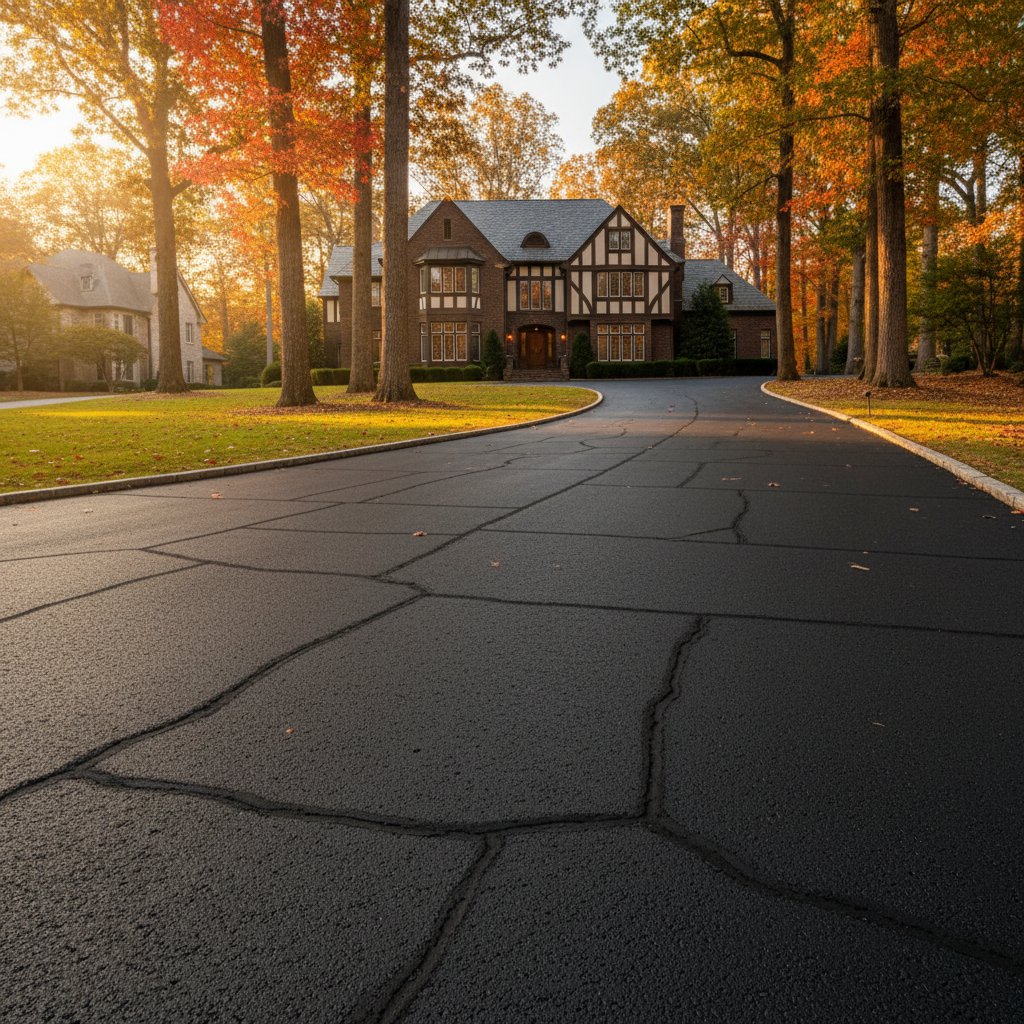
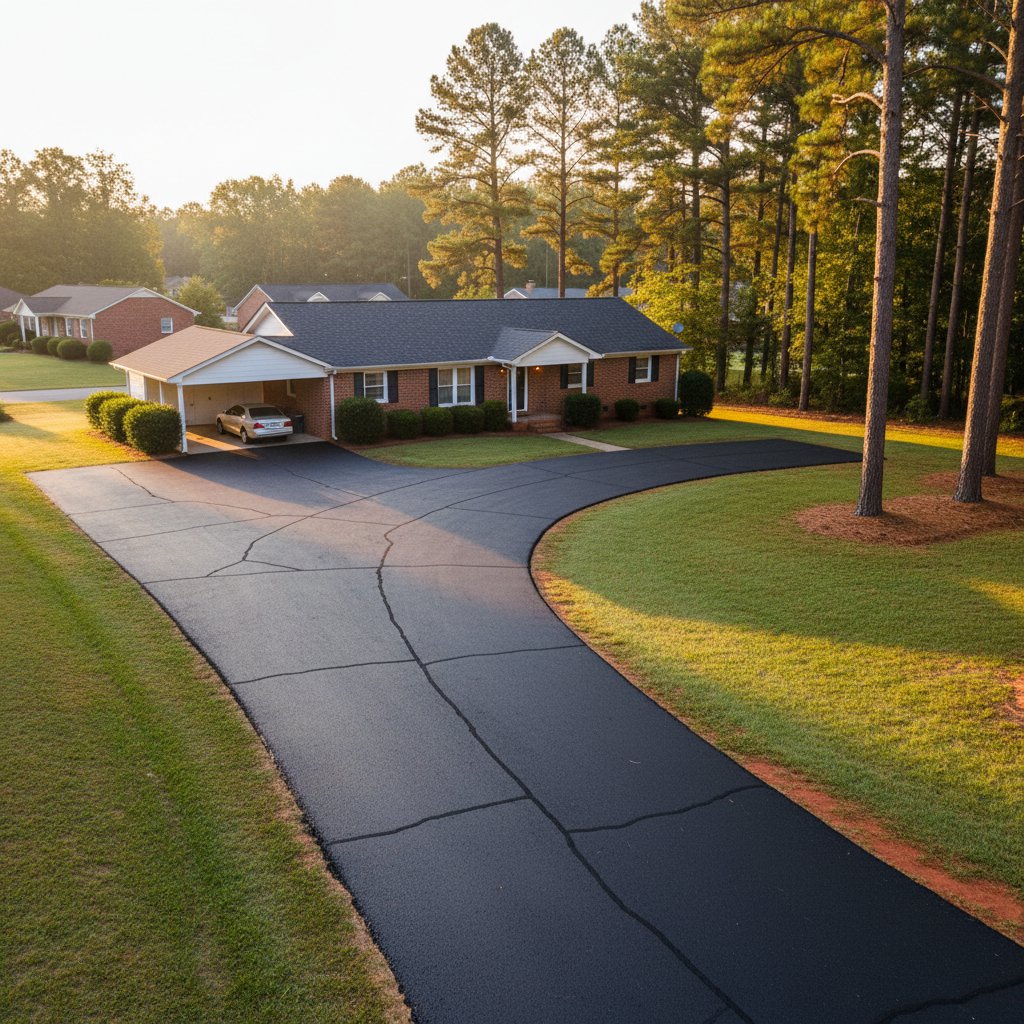
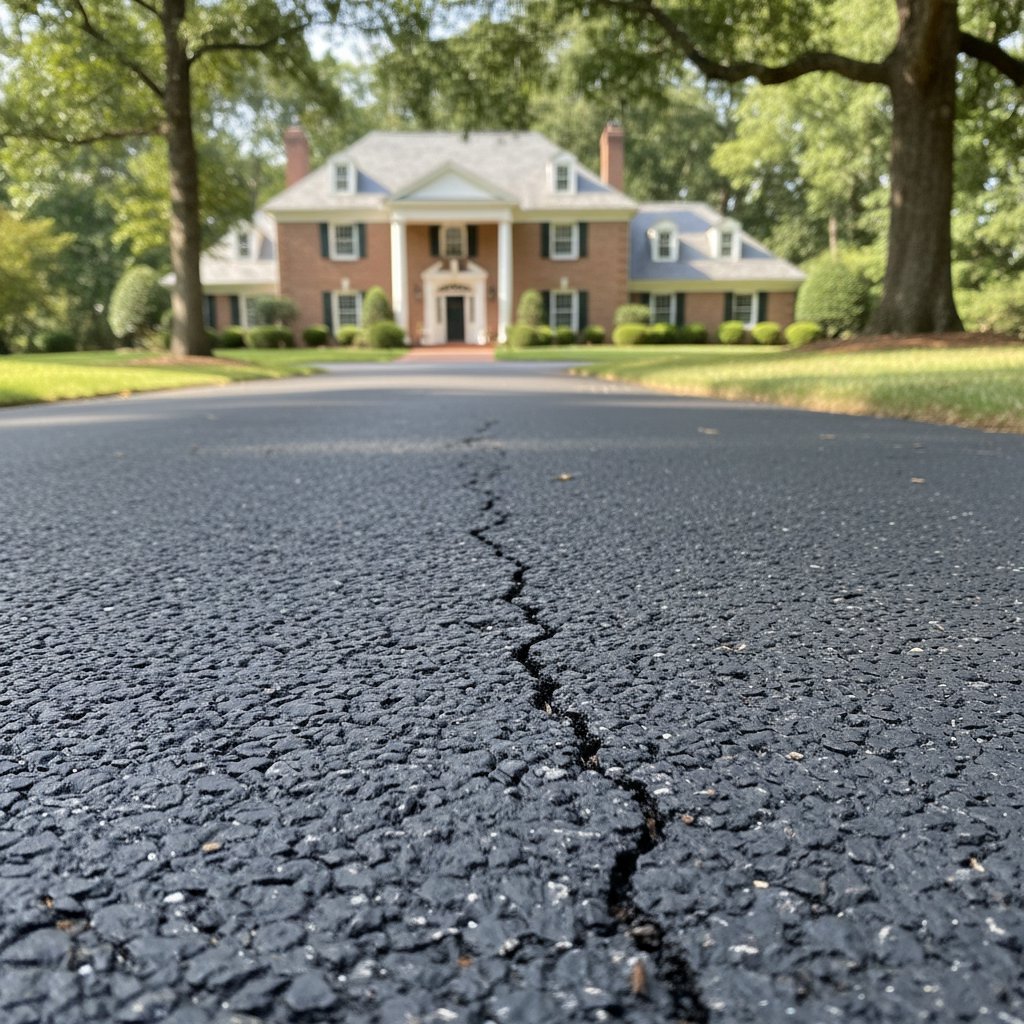
Recent Crack Filling in Winston-Salem
Signs You Need Crack Filling Now
Conditions where waiting through one more winter is going to cost real money.
Cracks Wider Than Eighth Inch
Once cracks open this far, water starts getting to the base. Filling before December locks the moisture out for the season.
Cracks Lengthening Year Over Year
If the same cracks were shorter last fall than they are now, the freeze-thaw cycle is actively widening them and it's going to accelerate.
Pavement Older Than Five Years
Even healthy-looking pavement five-plus years old has hairline cracks. Filling them on a schedule keeps water out before they get worse.
Before a Planned Sealcoat
Sealcoat doesn't fill cracks — it coats them. Cracks need to be filled with crack sealant first, then sealcoat goes over the top.
How We Crack-Fill
Four steps from arrival to finished application.
Crack Assessment
We walk the surface, mark every crack wider than the fill threshold, and decide which ones need routing versus a direct fill.
Routing and Cleaning
Larger cracks are routed to a clean rectangular reservoir, then blown out with compressed air so the walls are dry and debris-free.
Hot Sealant Application
Hot rubberized sealant is heated to spec temperature and applied molten with a wand, with a slight overband to seal the crack edges.
Cool and Re-Open
Sealant cools and skins over within minutes. The surface is back in service within an hour and fully cured by the next day.
What Our Clients Say
"Our driveway off Robinhood Road was alligator-cracked from years of freeze-thaw. The crew milled the worst sections, repaired the base, then laid a clean overlay. Two winters in and it still drains right and looks like the day they finished."

Beat the Freeze-Thaw Cycle
Get a free written estimate for crack filling before winter arrives. The cheapest preventive maintenance dollar you can spend on Piedmont asphalt, and the most valuable.