Asphalt Resurfacing & Overlay in Winston-Salem, NC
Mill or overlay over a sound base — a fresh hot-mix surface that buys another full cycle of pavement life for a fraction of what replacement costs.
Get My Free Resurfacing Estimate (336) 276-1256Asphalt Resurfacing & Overlay in Winston-Salem, NC
A1 Asphalt Winston-Salem resurfaces driveways and parking lots across Winston-Salem and the Piedmont Triad when the surface is worn out but the base underneath is still doing its job. Resurfacing is the most cost-effective way to extend pavement life if it's the right call — and we'll tell you honestly if it isn't. A 1.5 to 2-inch overlay over a sound, stable base can add 12 to 18 years to a residential driveway and 8 to 12 years to a commercial lot for 40 to 60 percent of the cost of full replacement. Call (336) 276-1256 for a free assessment and a written scope.
When Resurfacing Is the Right Call
Resurfacing works when the pavement structure underneath is still sound. Surface cracking, oxidation, raveling, and minor surface defects can all be addressed with an overlay if the base is holding up. The way we evaluate it is straightforward: we walk the property, look for alligator cracking that signals base failure, check for rutting or settlement that points to sub-grade problems, and probe any soft spots. If less than about 15 to 20 percent of the surface shows base-level failure, resurfacing is usually the right call after spot repairs to the failed areas. If failure is widespread or drainage was wrong from the start, an overlay just hides the problem for one or two winters before it shows back through. We don't recommend resurfacing in those cases — it wastes the customer's money and our reputation.

Request a Resurfacing Estimate
Limited Slots Available This Month!
Mill-and-Overlay vs. Direct Overlay
There are two ways to resurface. Direct overlay paves a new layer of hot mix directly over the existing surface, after cleaning, crack filling, and a tack coat. It's cheaper and faster, but it raises grade by the thickness of the overlay — typically 1.5 to 2 inches — which can cause problems at concrete edges, drainage inlets, garage aprons, and curb transitions. Mill-and-overlay grinds off the top inch or two of the existing surface with a milling machine, then paves the new layer back at the original grade. Milling preserves all the existing edge conditions and drainage, removes the most oxidized material, and provides a cleaner bonding surface for the new lift. It costs more than a direct overlay but it's the right answer for most commercial lots and any driveway with constrained edge conditions. We size the milling depth to the overlay depth so the finished surface comes back exactly where the original was.
Spot Repairs Before the Overlay
Before any overlay goes down, we address the spots where the existing pavement has actually failed. Alligator-cracked areas get saw-cut out and patched with hot mix down to a sound base. Large potholes get full-depth repairs. Settled or rutted sections get cut out and rebuilt to grade. Cracks get cleaned and filled with hot rubberized sealant. The reason this matters is that defects in the underlying surface telegraph through an overlay surprisingly quickly — a base failure paved over without spot repair will reflective-crack through a fresh 2-inch overlay within 2 to 3 freeze-thaw cycles. The spot-repair phase adds days to the project and a meaningful percentage to the cost, but skipping it is how a $25,000 resurfacing turns back into a failed lot in 4 years.
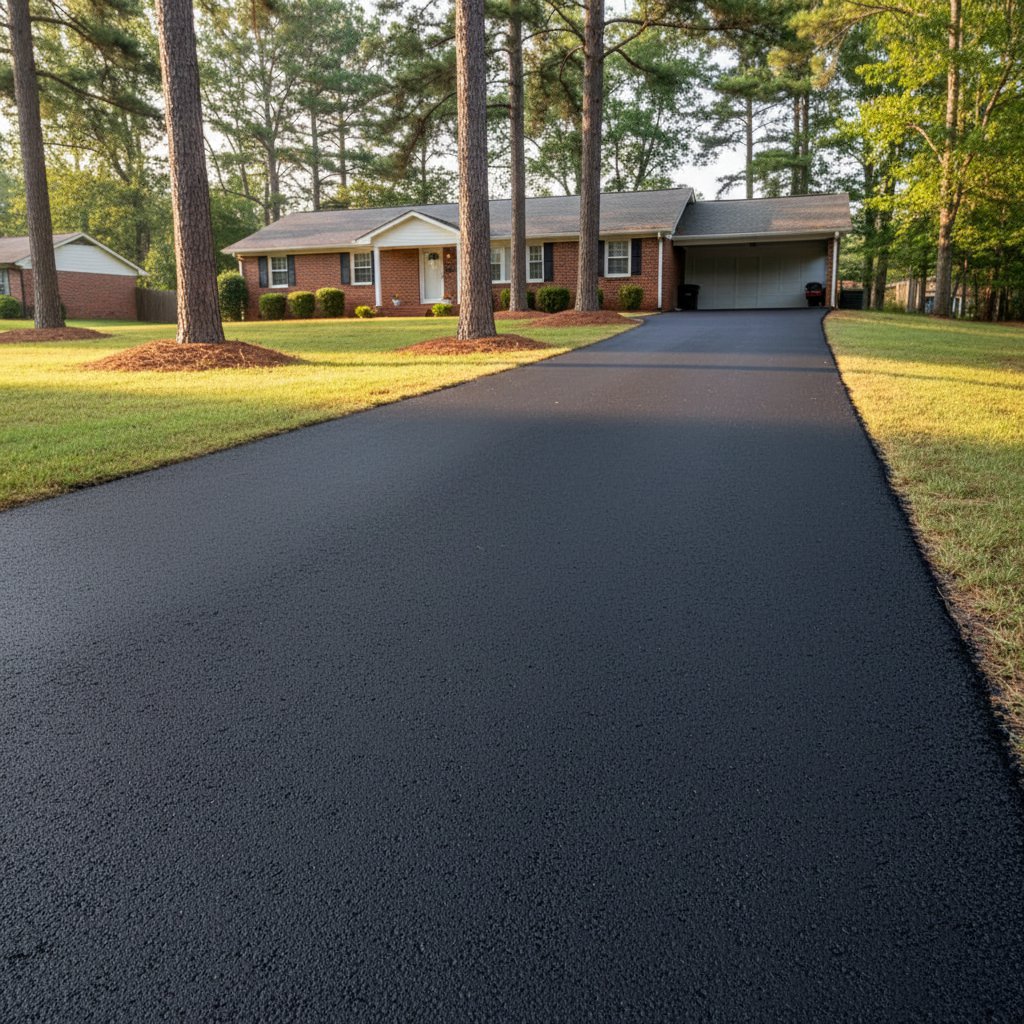
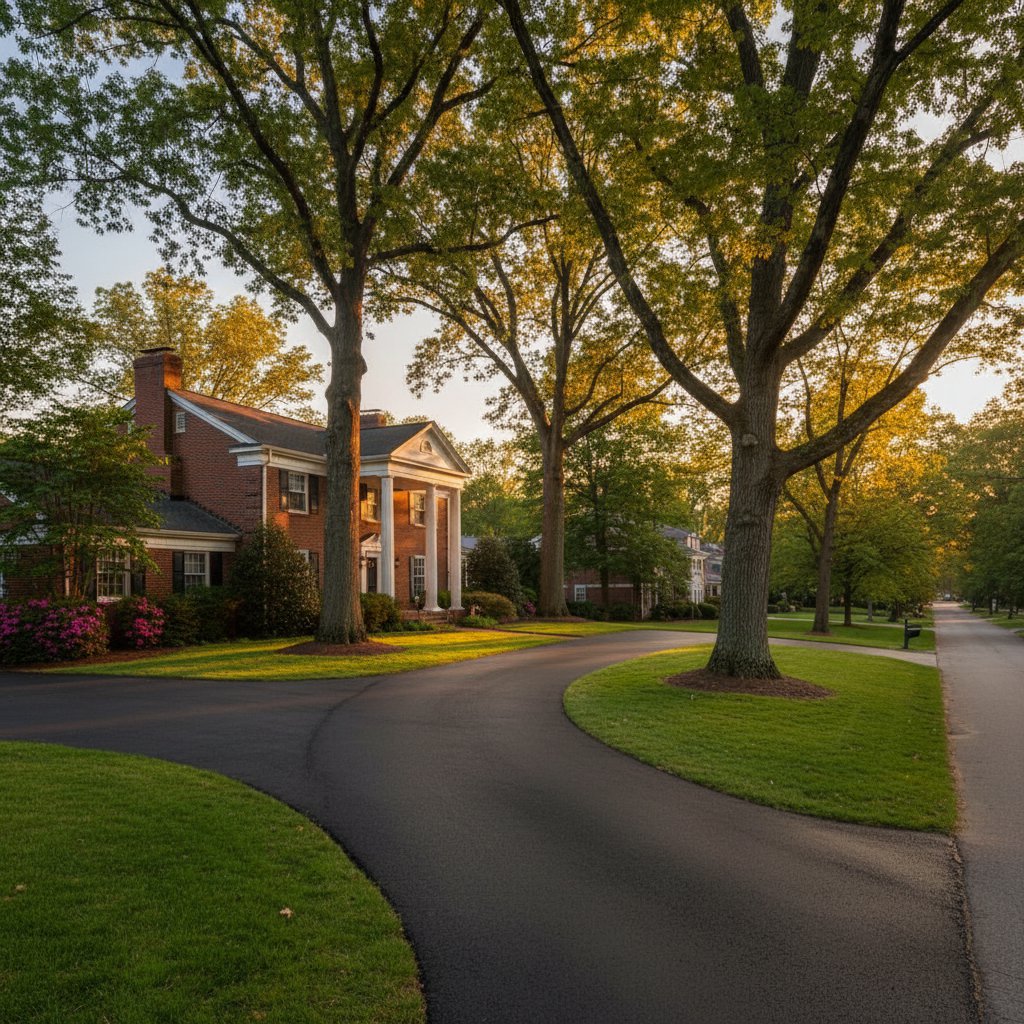
Recent Resurfacing Projects in Winston-Salem
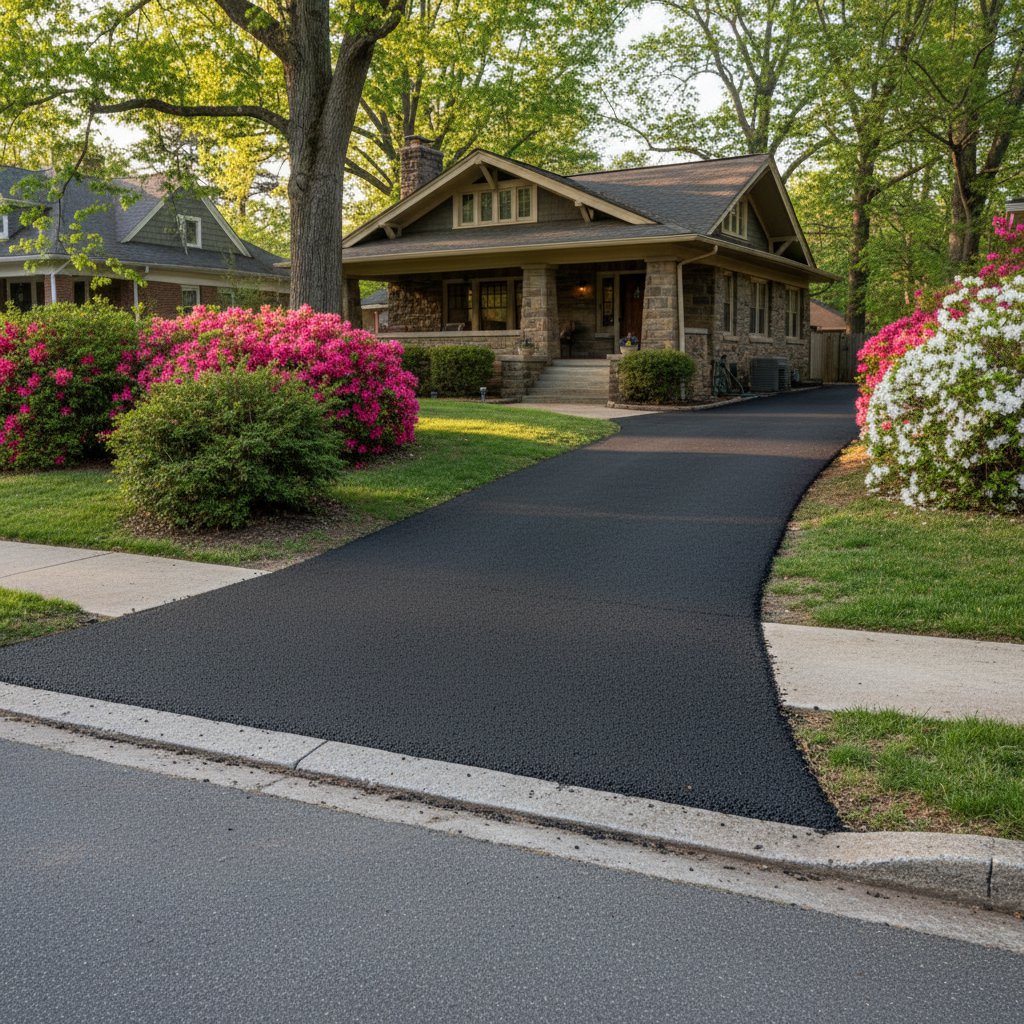
Signs Resurfacing Is the Right Move
Conditions where an overlay is likely to extend the pavement another full cycle.
Surface Wear Without Base Failure
Faded, oxidized, lightly cracked surfaces over a base that's still firm underfoot are textbook overlay candidates.
Cracks Under About a Quarter Inch
Hairline and narrow cracking that can be cleaned and filled before paving is exactly what a fresh wearing course handles.
Drainage That Still Works
If water moves off the surface the way it should, a clean overlay restores the wearing course without touching what's working.
Budget Constraints
When full replacement isn't realistic this season, a quality overlay buys another decade-plus and keeps the rebuild conversation in the future.
How We Resurface
The sequence we run on every overlay project.
Surface Assessment
We probe the surface, evaluate base condition, identify failed sections, and determine whether overlay is the right call.
Spot Repairs and Crack Filling
Failed sections are cut out and patched, cracks are cleaned and filled with hot rubberized sealant, and the surface is swept clean.
Tack Coat and Paving
A tack coat is applied to bond old and new asphalt, then a hot-mix overlay is laid at temperature with the paver.
Compaction and Striping
Surface is rolled to density, edges are formed, and on commercial lots the layout is re-striped after curing.
What Our Clients Say
"Our driveway off Robinhood Road was alligator-cracked from years of freeze-thaw. The crew milled the worst sections, repaired the base, then laid a clean overlay. Two winters in and it still drains right and looks like the day they finished."

Worn Surface, Sound Base?
Get a free written assessment of whether resurfacing is the right call for your driveway or lot. Honest evaluation, real numbers, and a scope that spells out the work.