Asphalt Paving in Winston-Salem, NC
New asphalt installs built from a properly graded base up — driveways, parking lots, and private roads designed to hold through Piedmont freeze-thaw winters.
Get My Free Paving Estimate (336) 276-1256Asphalt Paving in Winston-Salem, NC
A1 Asphalt Winston-Salem paves new asphalt surfaces across Winston-Salem and the Piedmont Triad — residential driveways, commercial parking lots, multi-family lanes, and private roads. Every project starts under the surface. We grade for drainage, compact aggregate base to the correct depth, and only then bring in hot mix. That sequence is what separates a 25-year pavement from one that's cracking three winters in. Call (336) 276-1256 for a free on-site estimate and a written scope that spells out exactly what you're paying for.
Why Base Prep Decides How Long Asphalt Lasts in the Triad
Asphalt is a flexible pavement, which means the surface flexes under load and transfers weight down into the layers beneath it. If those layers aren't right, the surface cracks, sinks, or ravels no matter how good the mix was. The Piedmont sits on red clay that holds moisture and shifts seasonally. Combine that with freeze-thaw cycles from December through February, where water trapped under the pavement freezes, expands, and pushes the surface up, and you have the single biggest reason driveways and lots fail early in Winston-Salem. Our prep starts with a site walk to check grading, identify low spots that pool water, and decide whether the sub-base needs to be excavated, augmented, or just regraded. We then install or rework aggregate base course to spec depth — typically 4 to 8 inches depending on traffic load — and compact it with a vibratory roller until it hits density. Only then does hot mix go down.

Request a Paving Estimate
Limited Slots Available This Month!
Hot-Mix Asphalt, Compacted at Temperature
We pave with NCDOT-spec hot-mix asphalt from local Triad plants, hauled in covered trucks to hold delivery temperature. Mix has to be laid above roughly 250°F and compacted before it drops below 175°F or it won't reach proper density and the binder won't bond. Cold mix and cooled hot mix are what create the rough, porous surfaces that ravel into loose aggregate within a year. Standard residential driveways get a 2-inch compacted lift of surface course over the prepared base. Commercial lots typically get a binder course plus a surface course — 3 to 4 inches total compacted depth — sized to the actual traffic loads. Edge work is hand-formed and rolled separately so the perimeter doesn't crumble where the paver couldn't reach. The roller passes are sequenced — breakdown, intermediate, finish — so the surface compacts evenly without rutting from the equipment itself.
Drainage, Edges, and What Happens at the Transitions
Most asphalt failures in the Triad start at three places: where the pavement meets concrete, where it meets a lawn or gravel, and wherever water is sitting on it. We pay attention to all three. Concrete-to-asphalt joints get a clean saw-cut edge with tack coat applied so the materials actually bond rather than separating in the first cold snap. Where pavement meets grass or soft shoulders, we form a clean lip with the right slope away from the surface so water sheds off instead of seeping in at the edge. And we set finished grade so water moves across the surface and off it in a single direction — no birdbaths, no flat spots, no spots where ice can form and sit through January. Done right, those details add 5 to 10 years to the surface life for almost no additional cost.
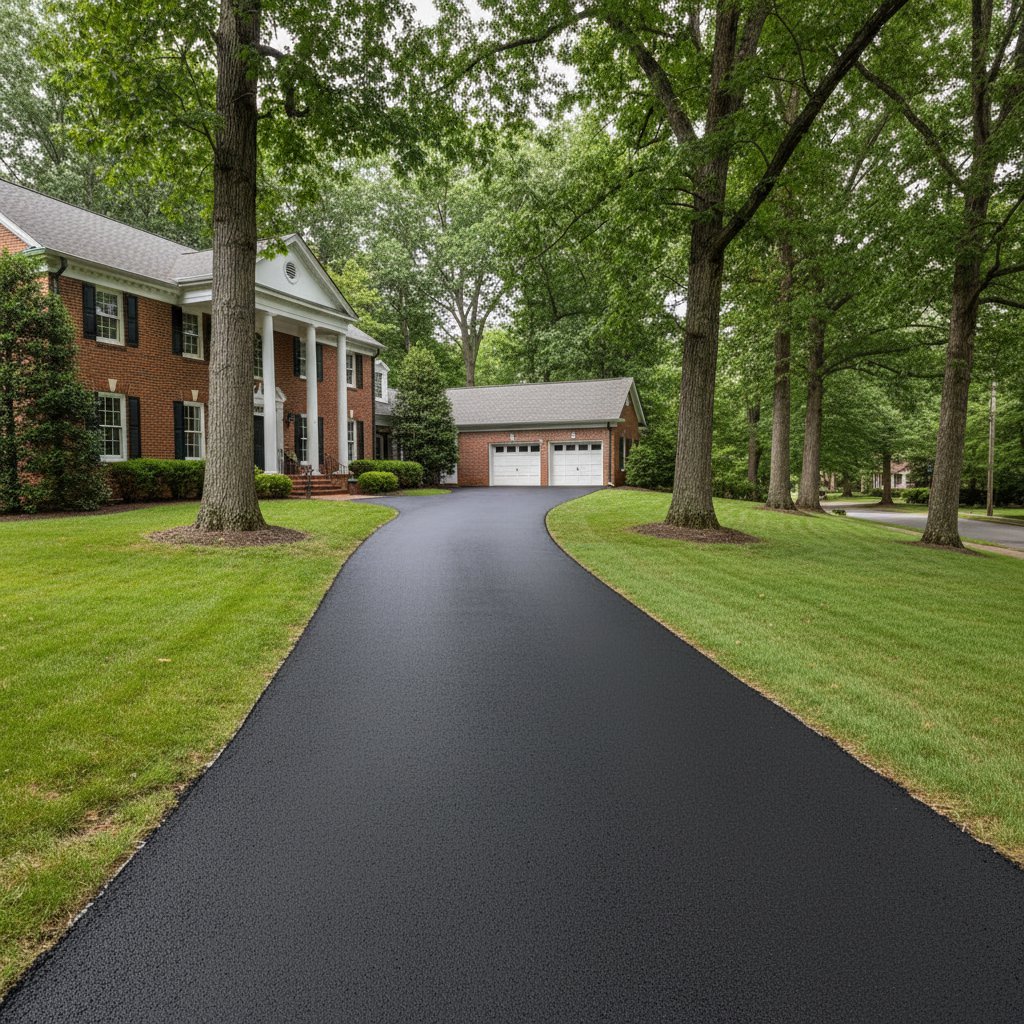
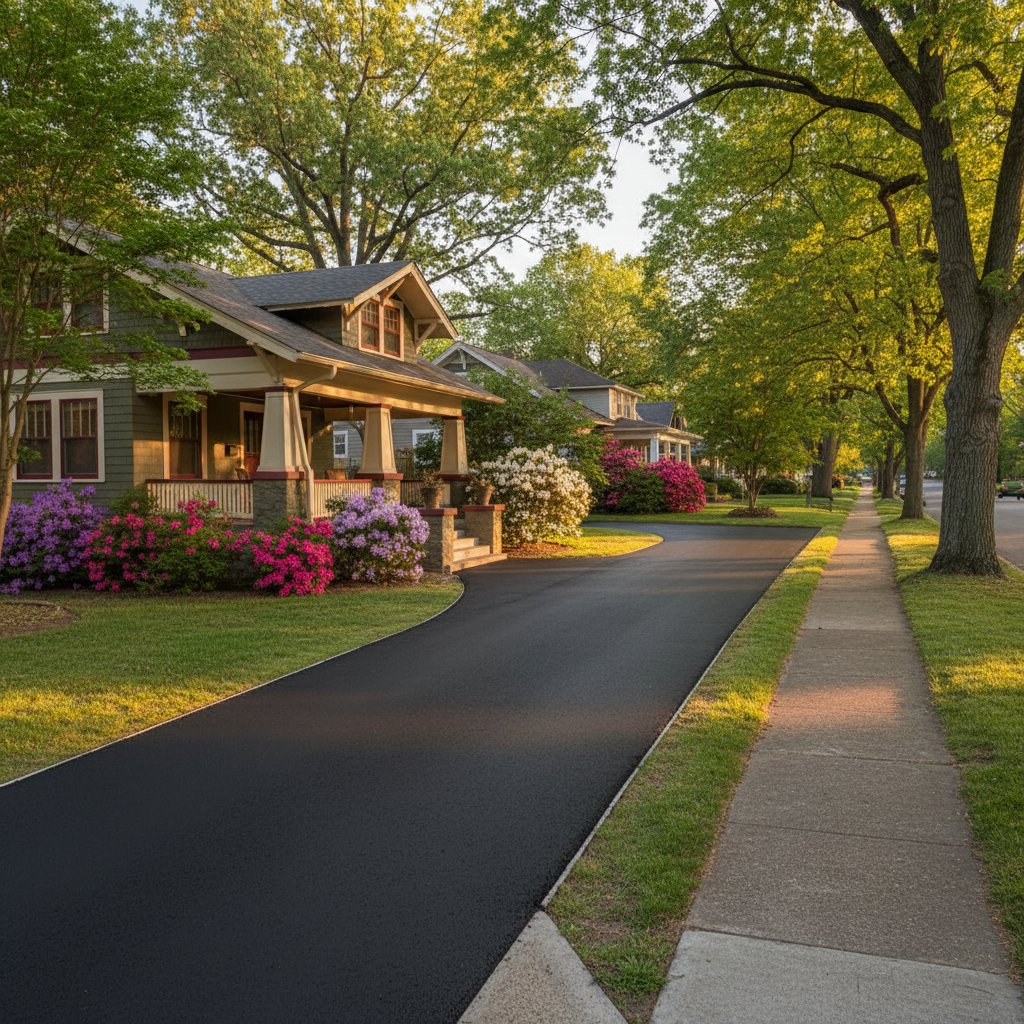
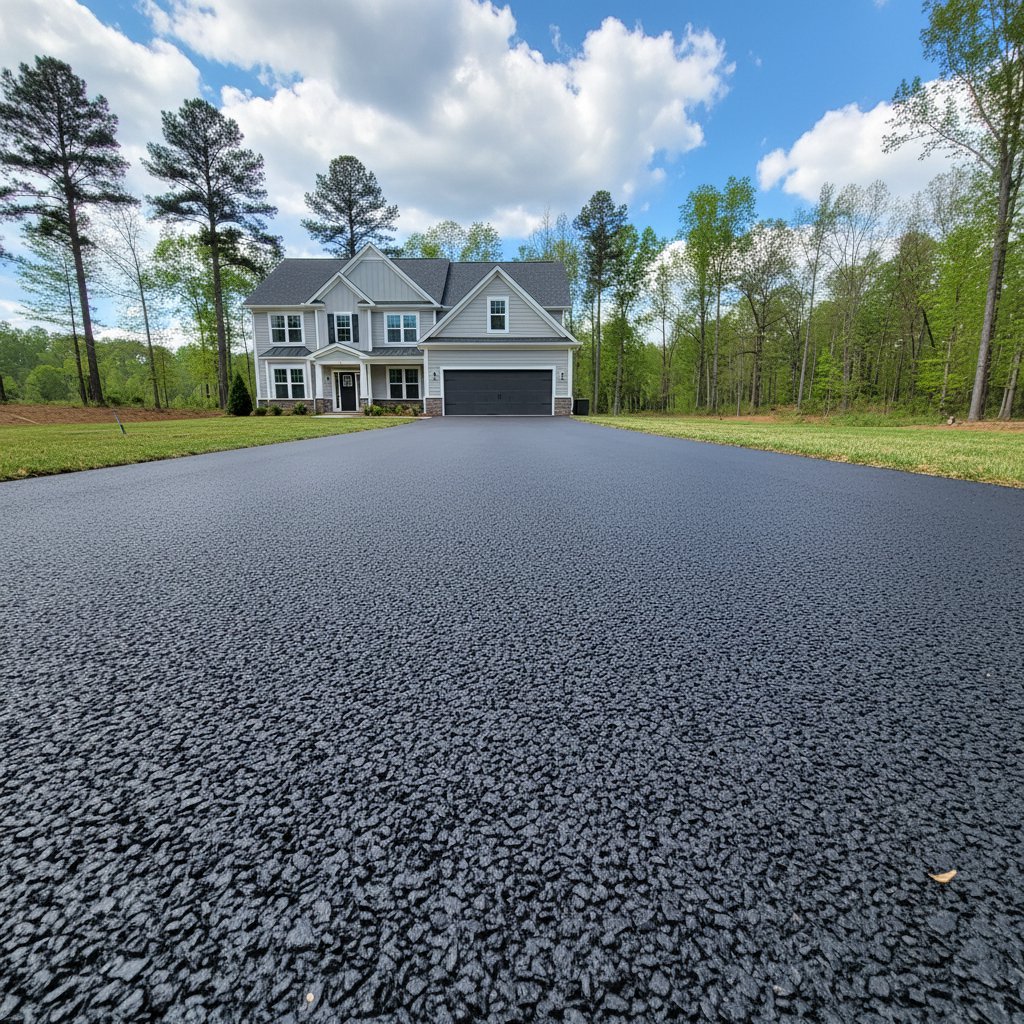
Recent Asphalt Paving in Winston-Salem
Signs Your Property Needs New Asphalt
Not every cracked surface needs a full repave. These are the conditions where patching and resurfacing won't save it.
Widespread Alligator Cracking
Interlocking cracks across more than 25 percent of the surface point to base failure. Patches won't hold; the foundation has to be rebuilt.
Sinking or Birdbaths
Pavement that's dropped, formed pools after rain, or rolls under foot has lost base support. Resurfacing over a failing base just buys a year.
Surface Older Than 25 Years
Even a well-maintained Piedmont driveway eventually reaches the end of its life. Oxidation and brittleness past that point can't be sealed back.
Drainage That Was Never Right
If the original install graded water toward the house, garage, or a low spot, a tear-out and regrade is the only real fix.
How We Pave
Four steps, in this exact order, every job.
Site Walk and Grading Plan
We measure square footage, check drainage, mark utilities, and lay out where the water needs to go before any equipment shows up.
Excavation and Base Prep
We remove old surface and failed base, regrade the sub-grade, then install and compact aggregate base course to the design depth.
Hot-Mix Paving and Compaction
Hot mix is laid at temperature with a paver, hand-worked at edges, and compacted with a roller in a sequenced pattern until density is achieved.
Edge Work and Cleanup
Edges are formed and rolled, transitions to concrete are sealed, the site is swept, and we walk the finished surface with you before we leave.
What Our Clients Say
"Our driveway off Robinhood Road was alligator-cracked from years of freeze-thaw. The crew milled the worst sections, repaired the base, then laid a clean overlay. Two winters in and it still drains right and looks like the day they finished."

Ready to Pave?
Get a free written estimate from a local paving contractor that does the base work right. We'll measure, walk the drainage, and tell you what your project actually needs — no upsells, no surprises.